EXECUTIVE SUMMARY
Contributed by Robert Lyman © 2026. Robert Lyman’s bio can be read here.
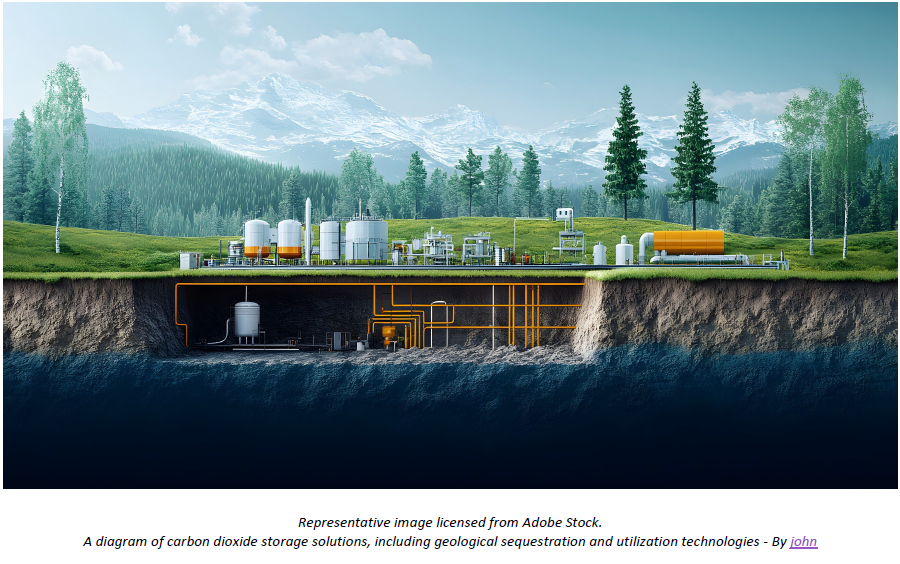
Alberta Premier Danielle Smith was recently quoted as saying that she has become a believer in the goal of “decarbonization” because she has been convinced that “technology” offers a way to achieve it.
Most public commentary and analysis of the decarbonization objective has focused on the feasibility, costs and benefits of the near-term objectives, typically the targets set for 2030, 2035 and 2040. So, it is easy to forget that the true objective, set arbitrarily for 2050, is the complete elimination of all human-caused GHG emissions. That means ending the production, processing, transportation and use of all coal, oil, and natural gas.
Here, I would like to focus on the implications of complete decarbonization on oil and gas. It is the largest single contributor to the Alberta economy, accounting for roughly $88 billion of GDP in 2024, equivalent to 25% of the province’s total GDP. It directly accounted for 200,000 jobs, equating to 8% of total employment. Total revenue from oil and gas production to Alberta was $153 billion in 2024, with oil sands ($105 billion) accounting for the lion’s share.
In 2020 GHG emissions from Alberta’s oil and gas industry broke down as follows: upstream extraction 122.7 MtCO2eq; pipeline transmission 5.2 MtCO2eq; and downstream operations 4.9 MtCO2eq; for a total that year of 132.8 MtCO2eq. There is remarkably little publicly-available analysis of the means by which the oil and gas industry worldwide can reduce its GHG emissions to near-zero.
In a January, 2020 article McKinsey and Company judged that, in the upstream portion of the industry, the options essentially came down to those that tackle fugitive emissions, flaring and extraction. The “extraction” menu of options was especially bare – energy efficiency, electrification and CCUS.
The November, 2025 memorandum of understanding between the governments of Canada and Alberta included a commitment to negotiate a “methane equivalency agreement’ with a 2035 target date and a 75% reduction target relative to 2014 emission levels. A 75% reduction is not complete decarbonization. It is reasonable to assume that the cost of completely eliminating methane emissions, if it is feasible at all, would be far higher than that of reaching a 75% reduction.
On July 2, 2026, Canada, Alberta and the Oil Sands Alliance (Canada Natural Resources Limited, Suncor Energy Inc., Cenovus Energy Inc., Imperial Oil Limited and ConocoPhillips Company) entered into a Memorandum of Understanding (MOU) on the Pathways Project to be confirmed in definitive agreements this Fall. The agreement includes “phased capacity targets” concerning the amount of GHG emissions to be captured, transported and stored per year. By 2035, carbon capture and storage (CCS) is to reach at least six million tonnes per year. By 2040, eleven million tonnes per year in total emissions reduction is to be achieved (by CCS and other means). By 2045, 16 million tonnes per year in emissions reductions is to be achieved through expanded CCS or other technology.
So, if the industry’s emissions stayed constant in future, the Pathways Project agreement would result in reductions of 3% in 2035, 6% in 2040, and 9% in 2045. That is not even close to zero emissions. In fact, it is likely that, with or without the Pathways Project, oil sands-related emissions are likely to continue increasing[1].
What are the chances of having ten to twenty more CCUS projects built and operating in Alberta by 2050, or even by 2070? What are the costs, and who is prepared to pay them? Neither CCUS nor other emissions-reducing technologies are likely to be available at acceptable cost in the timeframe to 2050, and probably much longer. If Alberta genuinely supports the goal of complete decarbonization, it must find a way to rapidly phase down and then phase out its most important industry. One can only speculate about the economic impact of this. In simple terms, complete decarbonization of the oil and gas industry alone would mean that millions of people and many billions of dollars would leave Alberta.
Continue reading in the PDF file
[1] Lauren Krugel. Oilsands emissions on track to outpace reductions from Pathways project: economist. The Canadian Press. July 14, 2006
Correct me if I’m misreading this, but your calculation of “carbon emissions” only takes into account the emissions created in the process of extracting and transporting oil. You seem to have have left out the vast bulk of the emissions created from oil & gas: those created in the course of refining and consuming hydrocarbon products.
By my back-of-the-envelop calculations, it would take 250,000 Pathways to neutralize worldwide human CO2 emissions.
The article says “In 2020 GHG emissions from Alberta’s oil and gas industry … downstream operations [is] 4.9 MtCO2eq”, which is small. This includes oil refining of 4.6 MtCO2eq. The numbers are from an Environment and Climate Change Canada Excel spreadsheet downloadable from their website. GHG emissions are reported by industry. The emissions reported in this post are just from the Alberta’s oil and gas industry. The 2024 GHG emissions from electricity generation and transportation given in the spreadsheet are 17.4 and 23.4 MtCO2eq, respectively. Total Alberta 2020 and 2024 GHG emissions were 265 and 260 MtCO2eq, respectively.
Danielle Smith has manifestly demonstrated her absolute, total and complete sell-out of Alberta and Albertans (for what promised return, ambassadorship or insider trading scam we can only imagine) she is a traitor, turncoat and evil-doer.